Subscribe to feed via email:
Subscribe RSS

Archive for 2010

Did No Ordinary Family pull a “Riker’s Beard”? Nov 17

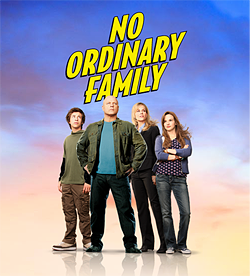
No Ordinary FamilyIs anyone else watching No Ordinary Familythe show about a family of superheroes? I think it may have pulled a Riker’s Beard (the opposite of “Jump the Shark”) in last night’s episode, and turned itself around.

Don’t get me wrong, the show has its inspired moments. But usually it’s so bad that I created a new drinking game. You do a shot when you see something completely unbelievable.1

Here’s how you would have played the game with last week’s episode:

  • When the nosy grandparents show up unexpectedly, the entire family goes outside to talk in “private.” They discuss their superpowers out in their driveway in the still of night, without lowering their voices in any way.
    TAKE A SHOT
  • The family is worried that the grandparents will notice something is different with them, so instead of trying to avoid them, they inexplicably alter their lives to spend more time with the grandparents so they can keep the grandparents from figuring anything out. On what planet does that make sense? 2
    TAKE A SHOT
  • The father, who has super strength, jumps up to a half a mile from house rooftop to house rooftop without so much as breaking a tile or alerting the houses’ occupants.  Does he have silencer shoes? Why couldn’t he have simply made these jumps in alleys behind the houses or somewhere else more stable and discreet?
    TAKE A SHOT

Needless to say, if I play this game I’m usually sloshed by the end of the episode.

But last night’s episode was disappointing, in that it wasn’t, er… disappointing. It was actually pretty good. Maybe the disparate voices in the writers’ room have finally agreed on the tone of show? Maybe it has pulled a Riker’s Beard and is about to become awesome?

Only time will tell. But in the meantime, I’ll have my booze ready. (Maybe the trick is to drink before watching the show?)

Anyone else find last night’s episode uncharacteristically good? Anyone think I’m off base? What’s your take?


Want me to read your screenplay? Please take a look at my script services.

  1. “Unbelievable” shouldn’t be confused with “unrealistic.” An “unrealistic” world where superheroes exist should still come across as  believable.
  2. The plot device with the grandparents is necessary, but surely they could have come up with a less absurd explanation to force the interaction.
Category: Television, Writing  | 3 Comments
The Decision To Become A Screenwriter Nov 12

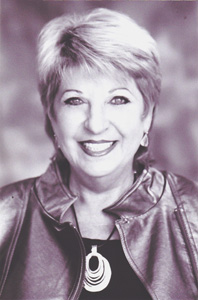
Michele  Wallerstein

Event Announcement: Michele Wallerstein will be holding a free seminar on Saturday, November 20th, 3PM at the Sherman Oaks Borders store.

The topic is: “Getting Started.” It’s the beginning of a 4 part series that she’ll be doing for Borders Books.

The Decision To Become A Screenwriter

by Michele Wallerstein
Author of:
MIND YOUR BUSINESS: A Hollywood Literary Agent’s Guide To Your Writing Career

OK, so, you’ve decided to write a screenplay. Your motives may be good, bad, strange, silly or desperate. You may not even know what they are. In any event, you’ve made that emotional commitment to become a screenwriter. Here come the important questions you now have to ask and answer. Just like a journalist you need to find out the who, what, where, when and how you will be able to accomplish this feat.

The questions of “who” has to do with looking within yourself to discover if you have the right combination of creative talent, business acumen with a bit of brio thrown in. Yes, you will absolutely need all of these personal qualities to be a successful screenwriter. If any of them are missing, you will be in big trouble. If you aren’t really creative, how will you be able to tell a great story, or provide fascinating characters? If you don’t have some business sense, how will you be able to know if your project is salable, or marketable, or if your representatives are doing a proper job for you? If you don’t have the personal fortitude to push yourself forward on a personal basis, how will you be able to pitch yourself and your work to strangers? How will you be able to attend conferences, workshops, meetings, seminars and countless other social situations with confidence and verbal clarity?

The “what” has to do with your choices of what to write. Are you interested in romance, drama, sci-fi, thrillers or comedies? If there are a couple of areas you are interested in, how will you choose?

The “where” deals with moving to the hub of the motion pictures and television industry. Can you really be a Hollywood screenwriter by living outside of California?

The “when” is now. Writing is primarily thinking so you may begin immediately. If you are serious in this endeavor, don’t put it off. You can even keep your day job and become a screenwriter. I love the Zen saying: “Leap, and the net will appear.” Go ahead, if it feels right, do it. Procrastination is a terrible thing that can haunt your life forever.

The “why” is honestly defining your motivations. Are you someone who has always been a dilettante? Do you simply feel that every time you go to a movie you think; “I could write a better movie than that”? Do you imagine a glamorous life with cocktail parties attended by famous directors and actors? Finally, do you have the calling?

Now, for the really hard one; the “how,” which is the finding of your starting point and moving on from there. This means making more right decisions than wrong ones which, in and of itself, defines success.

Of course you will need more than these things to discover about yourself, but these are jumping off points that are important to having a successful writing career. None of them can be ignored, but some of them can be learned.

You can learn to be braver and more forthcoming in personal interactions. You can practice, get into therapy, get help from seminars on self-confidence and find other avenues to learn to get rid of that terrible shyness.

You can also take steps to learn the craft of writing. It is actually imperative that you read the books, take the classes and most importantly, practice, practice, practice.

Writing takes sweat and tears. It’s a combination of a cruel and immensely rewarding occupation. It takes years to become a good writer. It takes a thick skin to listen to criticism and requests for changes in your work. It takes commitment and tenacity. If you either have the right answers to all of the above questions or you are dedicated to trying to work on the issues that you lack, then take that wonderful leap and see what amazing things can happen.


Michele Wallerstein is a Screenplay & Novel & Career Consultant and author of “MIND YOUR BUSINESS: A Hollywood Literary Agent’s Guide To Your Writing Career“.

Email: novelconsult@yahoo.com
Web site: www.novelconsultant.com

Copyright 2010 Michele Wallerstein. Not be used without written permission from Author.

Awards Watch Roundtable Video Nov 10

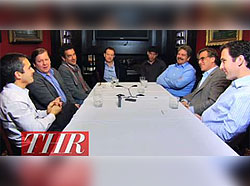
THR Writers RoundtableWouldn’t it be nice to eavesdrop on a conversation with some of the best screenwriters working today? Well The Hollywood Reporter has given us that opportunity.

Writers Aaron Sorkin (The Social Network), Simon Beaufoy (127 Hours), Michael Arndt (Toy Story 3), John Wells (The Company Men), Todd Phillips (Due Date) and David Lindsay-Abaire (Rabbit Hole) sit down for an hour long Q & A.

If you just want a taste of the discussion, THR provides the following three quick snippets:

Awards Watch Roundtable: The Writers 1
How did the firing go down? For the first time, Todd Phillips reveals Mel Gibson’s reaction to being cut from “The Hangover II.”

Awards Watch Roundtable: The Writers 2
Aaron Sorkin, John Wells and Todd Phillips weigh in on wrangling with the legal department over their films. Plus, what title did “Old School” almost get slapped with?

Awards Watch Roundtable: The Writers 3
What is it about the WGA that makes “Due Date” writer Todd Phillips refer to it as “the whiner’s guild?” And why does Aaron Sorkin call the WGA “it’s own worst enemy?”

H/T to Benjamin R. for the link.

Category: Interviews  | 2 Comments
Passive Plagiarism? Nov 07

The Whole Internet Truth

ANOTHER UPDATE:  The Story Department article has been edited and all is well. Thanks everyone!

UPDATE: The article in question on The Story Department‘s web site has been taken down pending review. (P.S. The Story Department is still one of my favorite sources of information on screenwriting)

I consider myself a pretty fair guy. I go out of my way to cite sources of any material I use, and am even happy to promote fellow consultants if I think they’ve got something important to say.

So imagine my surprise when one of my readers pointed out that they found several of my ideas posted in a recent article on The Story Department‘s web site, without any credit.

In this post about passive protagonists, written by Jack Brislee, the following appears:

On the other hand, a passive protagonist displays some or all of the following traits.  He

has no strong desire
does not make decisions
does not pursue a goal
is reactive instead of active
allows someone else to dictate his life

Now here’s what I wrote in my post on the subject of passive protagonists earlier this year:

A passive protagonist is a main character that displays some or all of these traits:

has no strong desire
doesn’t make decisions
doesn’t pursue a goal
reactive, instead of active, as a rule
allows someone else to dictate their fate

Look familiar?

Now obviously the concept of what constitutes a passive protagonist has been around a while, but the expression of this particular concept was unique to my site.

And what about the controversial hook of Jack Brislee’s article — i.e. breaking/bending the rule of no passive protagonists?

Here’s what he has to say:

Even the most rusted on admirers of the traditional Hollywood screenwriting style admit that there are three occasions when the protagonist may be passive –

  • in the first few pages of the script, where the protagonist can be passive in his normal world
  • after the inciting incident, where the enormity of the call to adventure might result in initial refusal.
  • at the end of Act II in the “All is Lost” or “Dark Night of the Soul” moment, when the protagonist, having just been beaten up (physically, mentally or both) is consumed with self doubt and unable to act.

I’m not sure I’d qualify as a “rusted on admirer,” but here’s what I had to say in one of my posts last year:

In a Hollywood script, there really are only three allowable times that your main character can be somewhat passive:

  1. In the first few pages of your script… your protagonist can be somewhat passive in their normal world…
  2. After the catalyst/inciting incident/call to action… Sometimes the hero refuses the call flat out.
  3. When “All is Lost” — usually late in Act II… the hero gets the crap beaten out of them (either physically or mentally or both), and has a moment of crisis. The protagonist takes a moment to wallow in self doubt, after having just endured some form of tragedy or failure.

This one’s especially irksome. The point being made may not be earth-shattering — it’s more like one of those, “Hey yeah, you’re right!” kinda deals — but as far as I know, I was the first one to make the point. Is it too much to ask for a shout out? There are other authors cited in the post, just not me.

I’m happy that Jack Brislee is writing posts that show how some screenwriting rules can be broken.

But plagiarism should not be one of those rules.


Want me to read your screenplay? Please take a look at my script services.

Category: Plagiarism, Rants  | 5 Comments
Photo Quotables: Napoleon Hill Nov 04

My dear old mom has a blog where she combines two of her passions — photography and quotes. Quite often she’ll post a great picture-quote that’s applicable to screenwriting, but isn’t screenwriting specific.

Here’s today’s inspiration:

Desire is the starting point of all achievement, not a hope, not a wish, but a keen pulsating desire which transcends everything. ~ Napoleon Hill

Desire is the starting point of all achievement, not a hope, not a wish, but a keen pulsating desire which transcends everything. ~ Napoleon Hill

As an aspiring screenwriter, the obstacles you’ll have to overcome and the sacrifices you’ll have to make are plentiful. Beyond having talent for the craft, to make it in this business you have to really want it. Hold fast to your desire and passion for writing. It will separate you from the pack.

Picture and quote via Photo Quoto


Want me to read your screenplay? Please take a look at my script services.

Related Posts Plugin for WordPress, Blogger...
Category: Quotes  | One Comment